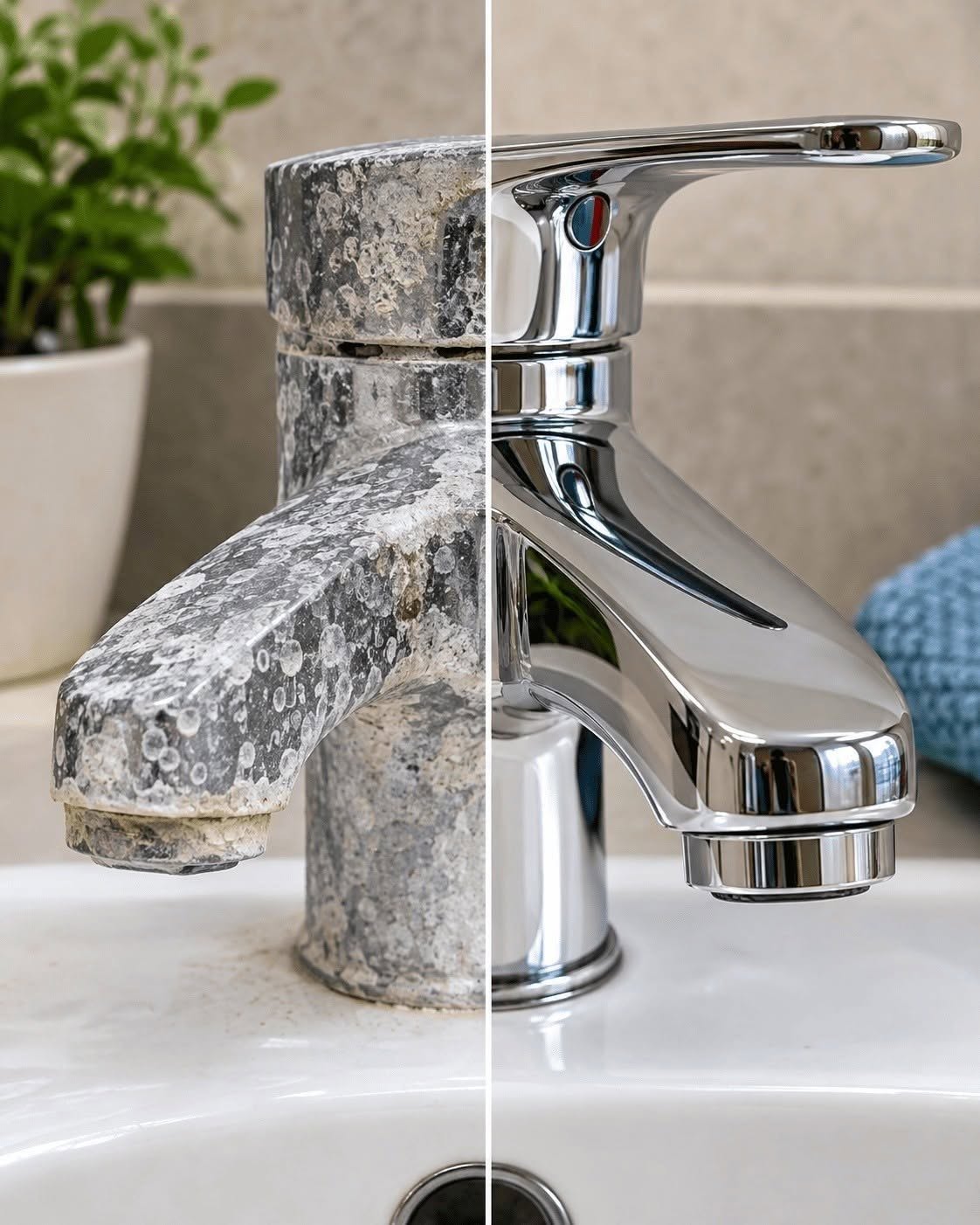
harsh detergents.
Why does limescale form on faucets?
Water naturally contains dissolved minerals, particularly calcium and magnesium salts. When droplets remain on the faucet and the water evaporates, these minerals don’t disappear: they are deposited on the surface as limescale.
small, light-colored stains.
Over time, the individual deposits overlap and can form an increasingly thick white or grayish film. The most affected areas are usually the base of the faucet, the seals, the lever, and the aerator at the end of the spout.
Therefore, the simplest prevention is to dry
There’s more to discover. Continue to the next page for the rest of this article.